Skip to content
Use Case . Remote Site Management

Stable Digital Signage Network — Recoverable Even After a System Crash

Digital signage is widely used in retail and public spaces for content delivery and brand communication. A typical digital signage system includes three core modules:

  • Content Management System (CMS)
  • Device Management
  • Network

An effective digital signage system should be able to always display up-to-date content and can be remotely managed in a secure manner.

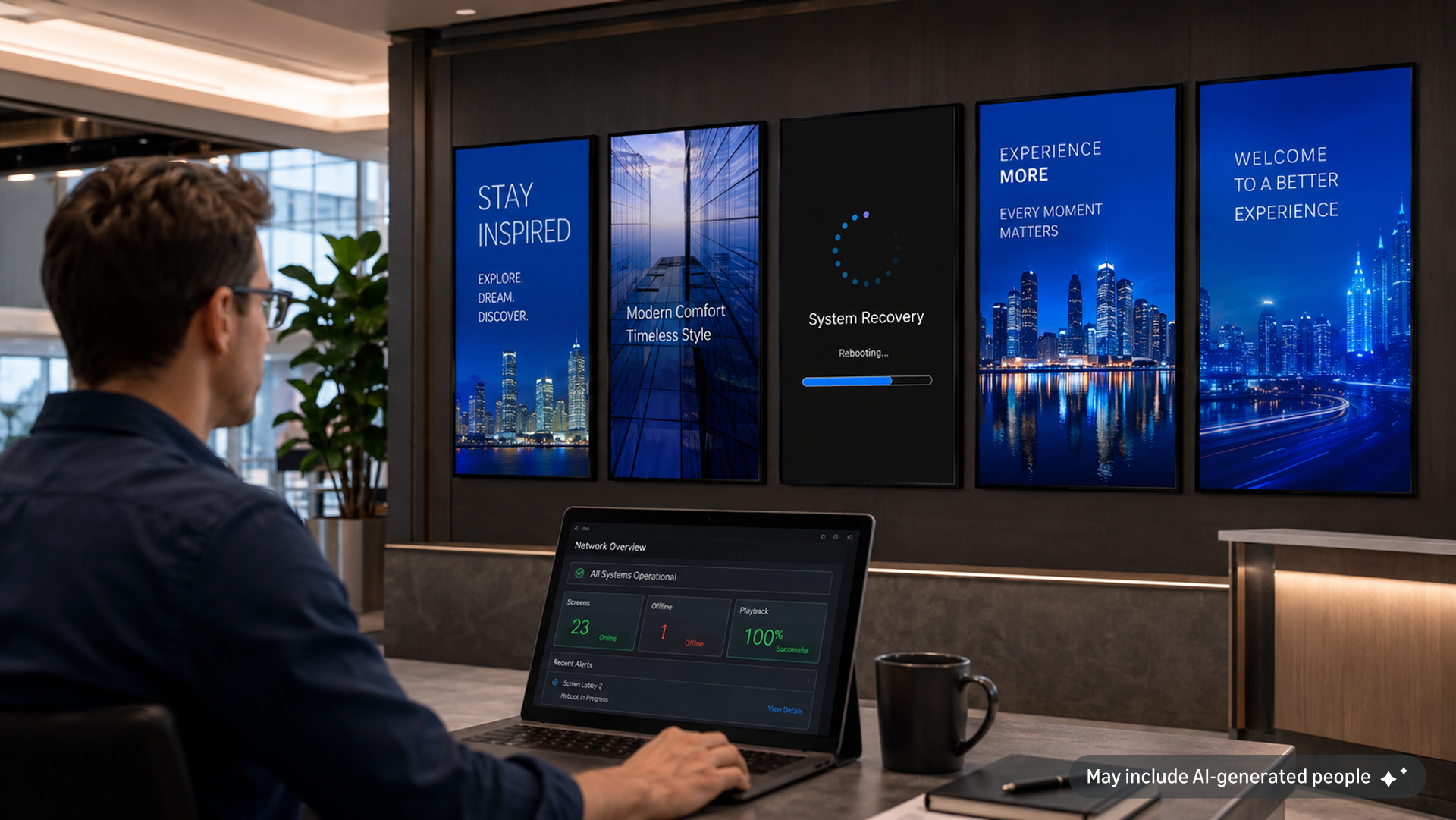
However, for large-scale deployment, the biggest challenge is not only keeping devices online, but also regaining full control after devices go offline or experience system crashes.

Stable Digital Signage Network — Recoverable Even After a System Crash

Challenges & Solutions

Challenges — Drawbacks of Traditional Solutions

Digital signage operators are constantly facing these pain points:

  1. 1Network dropout: Ad content loss & SLA breach risks
  2. 2On-site maintenance: High troubleshooting costs
  3. 3Device crash: No remote access and unpredictable downtime
Solution — Stable Network + Out-of-Band Recovery

GL.iNet provides a dedicated architecture for persistent connection, secure access and full remote recovery, available even after a digital signage system failure.

  1. 1Multi-WAN Availability: Automatic failover among cellular, Ethernet and Wi-Fi to keep screens online 24/7.
  2. 2Zero-Exposure Security: Encrypted remote access via VPN or GoodCloud to ensure secure data transmission.
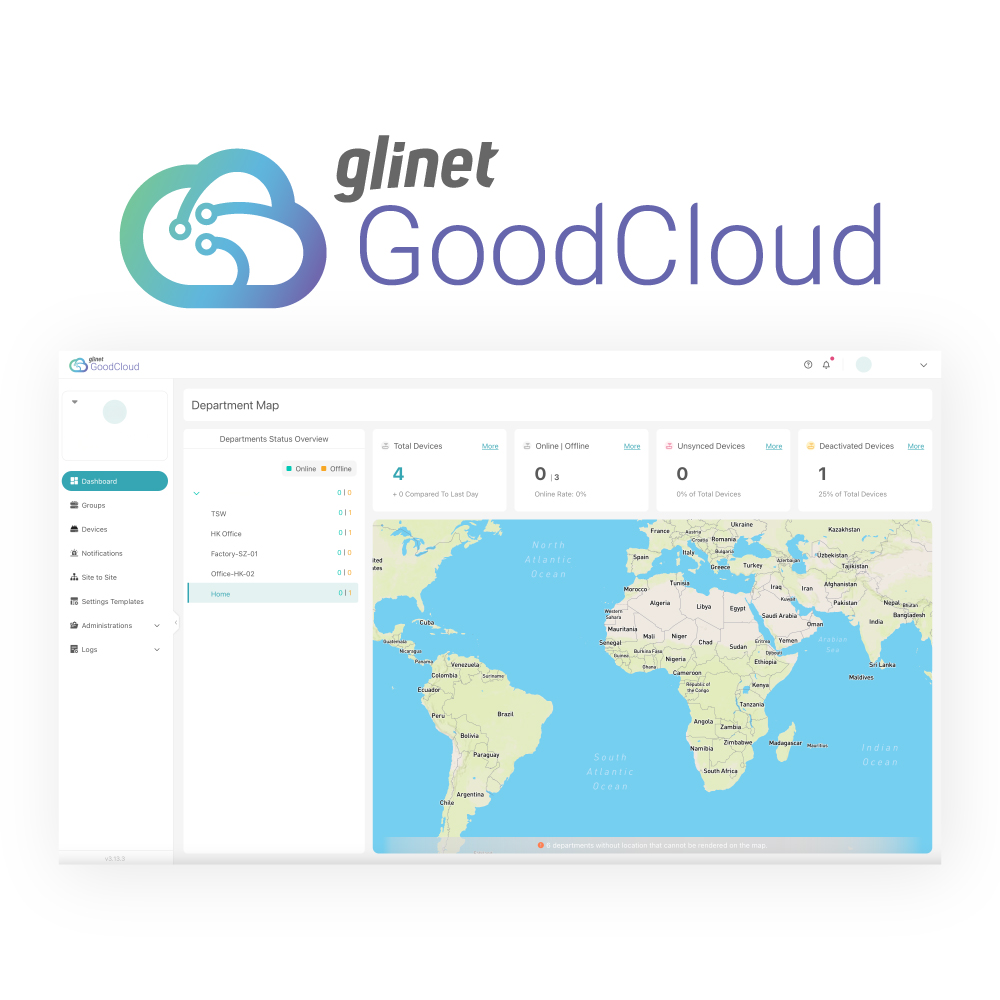
  3. 3Remote Monitoring & Management: Real-time device visibility and centralized control via cloud platform.
  4. 4BIOS-Level Recovery: BIOS-level remote access, allowing remote OS installation.
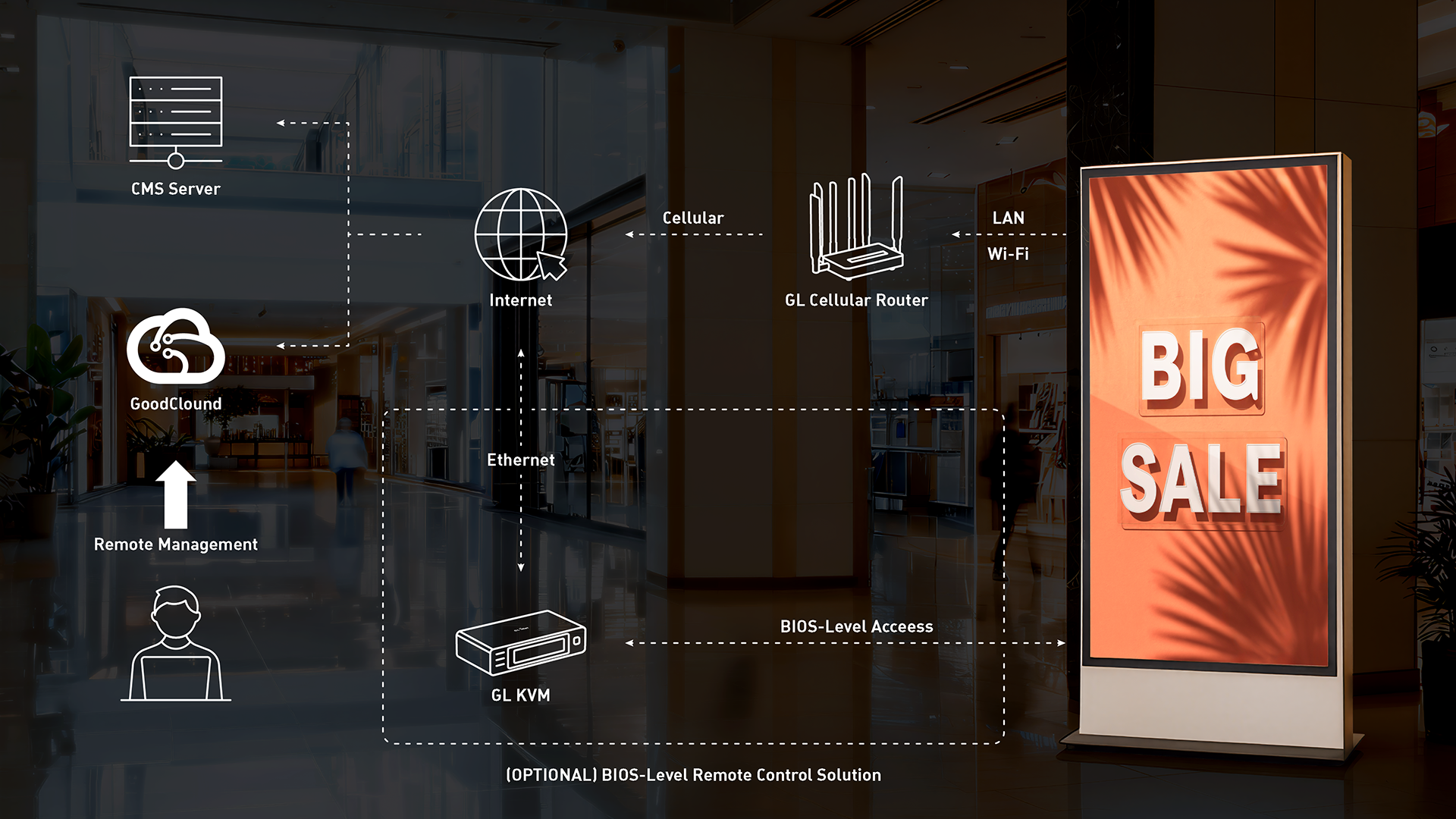
Topology

Setup 1: Standard Store

This setup is suitable for standard outlets requiring stable connection and basic remote management.

Setup 2: Critical Location

This setup is suitable for mission-critical scenarios where downtime is not acceptable. Furthermore, all remote access is encrypted through cloud tunnels or Tailscale, with no public port exposure.

Results

  • Greatly reduced on-site visits
  • Synchronized and stable playback across all sites
  • Lower operational costs and faster fault response
  • Higher system resilience with redundant networking and out-of-band recovery

Compare products

{"one"=>"Select 2 or 3 items to compare", "other"=>"{{ count }} of 3 items selected"}

Select first item to compare

Select second item to compare

Select third item to compare

Compare